Before & After: What a Master Closet Transformation Actually Looks Like
See what happens when a builder-grade master closet gets a custom upgrade. Real transformation story from LB Classic Closets in Columbia, MO.
We can talk about custom closets all day, but sometimes the best way to explain what we do is to walk you through a real transformation. Not a staged photo shoot with perfectly folded sweaters and color-coordinated hangers. A real project, with real problems, and a real solution.
This is the kind of project we do regularly at LB Classic Closets. A Mid-Missouri homeowner who was fed up with their master closet, reached out, and let us fix it. Here's what happened from start to finish.
The Before: What We Were Working With
The master closet was a 7x8-foot walk-in. Not tiny, but not generous either. It's a common size in homes built across mid-Missouri in the 1990s and early 2000s. The builder had installed a single rod running the full length of each side wall with one shelf above each rod. That's it. One rod, one shelf, per wall.
Here's what that looked like in daily life.
Shirts, pants, jackets, and dresses were all jammed onto the same rods. Everything was pushed together so tightly that pulling out one shirt meant wrestling three more off the hanger. Sweaters were folded on the single shelf, stacked so high they tipped over every time someone grabbed one from the middle of the pile.
Shoes lived on the floor in a loose pile. Some had shoe racks (the kind that tilt and dump your shoes behind them). Most were just scattered.
There were no drawers anywhere. Socks, underwear, belts, and accessories were all in the bedroom dresser, which meant getting dressed involved walking back and forth between the closet and the dresser multiple times every morning.
The back wall was completely empty. No shelving, no storage, nothing. Just a blank wall that could have been working but wasn't.
And the light? A single overhead bulb that cast shadows in every corner and made it hard to tell navy from black.
The homeowner's morning routine took 15 to 20 minutes just to get dressed, and that's not counting the frustration of not being able to find things or having clothes fall off hangers onto the floor.
The Design: What We Planned
After a virtual design consultation, here's what we mapped out.
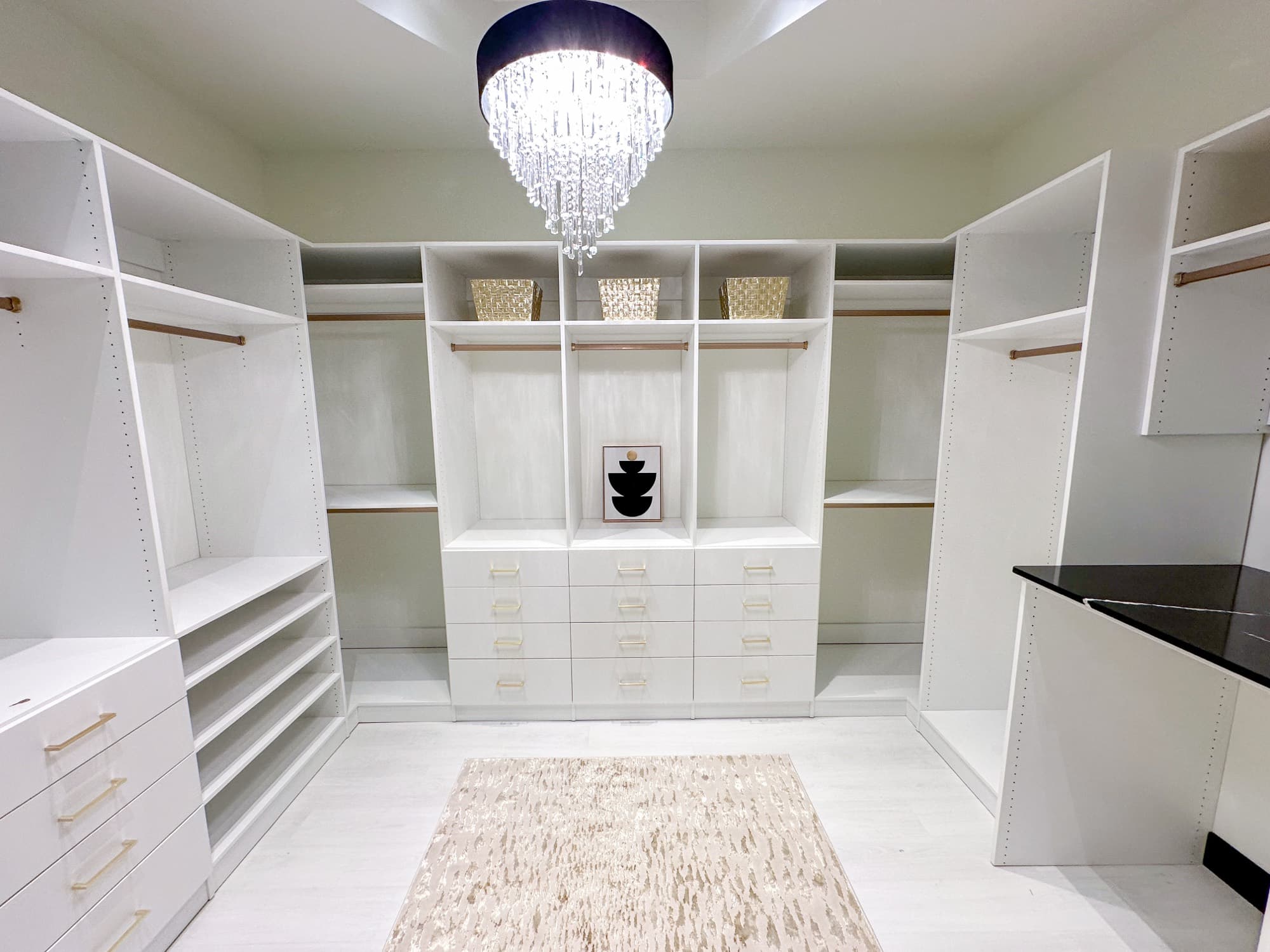
Left wall: double hanging. We split the left wall into two sections of hanging, an upper rod and a lower rod. The upper rod handles shirts, blouses, and jackets. The lower rod handles pants and shorter items. This immediately doubled the hanging capacity on that wall without adding a single square inch of space.
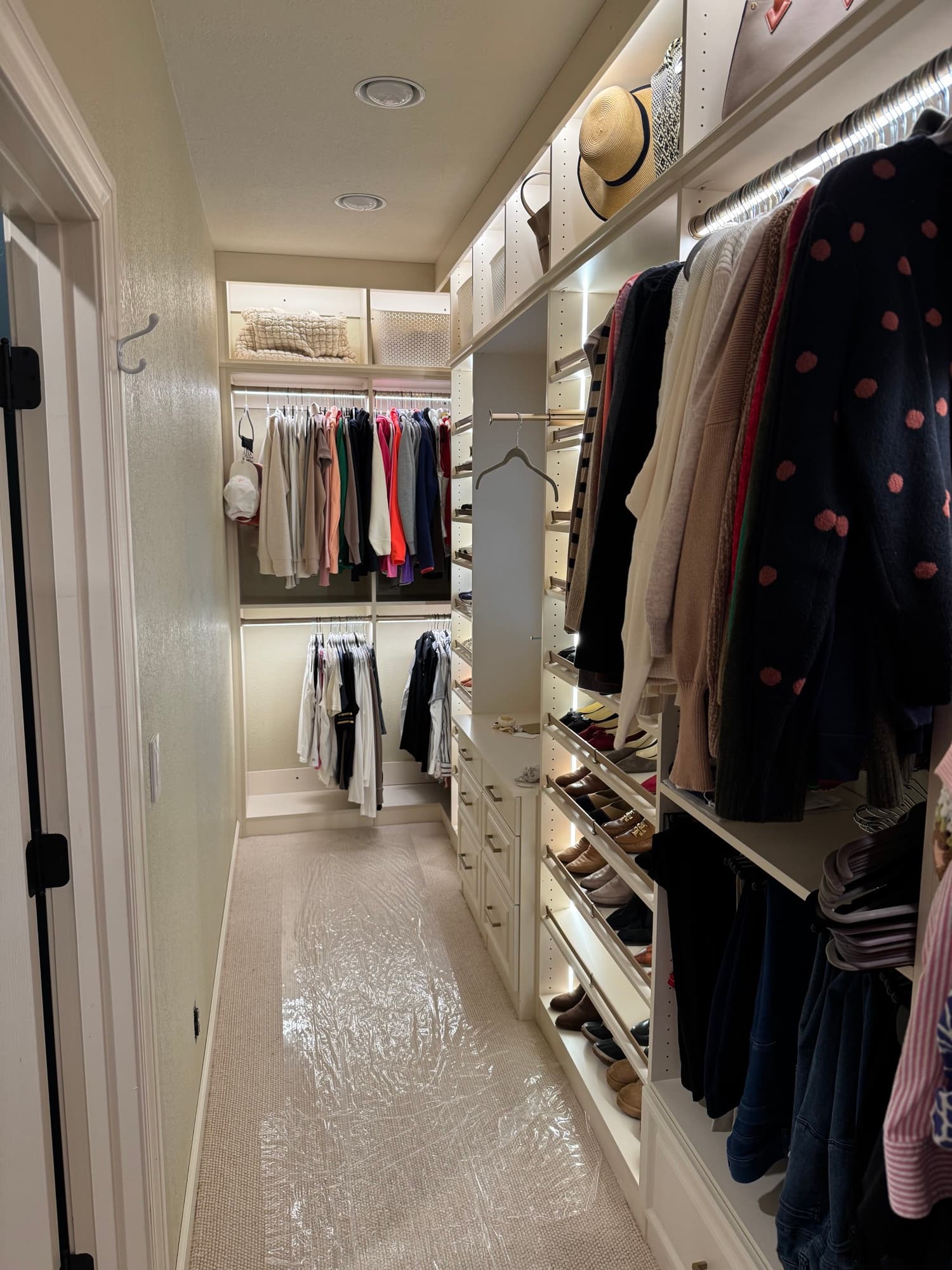
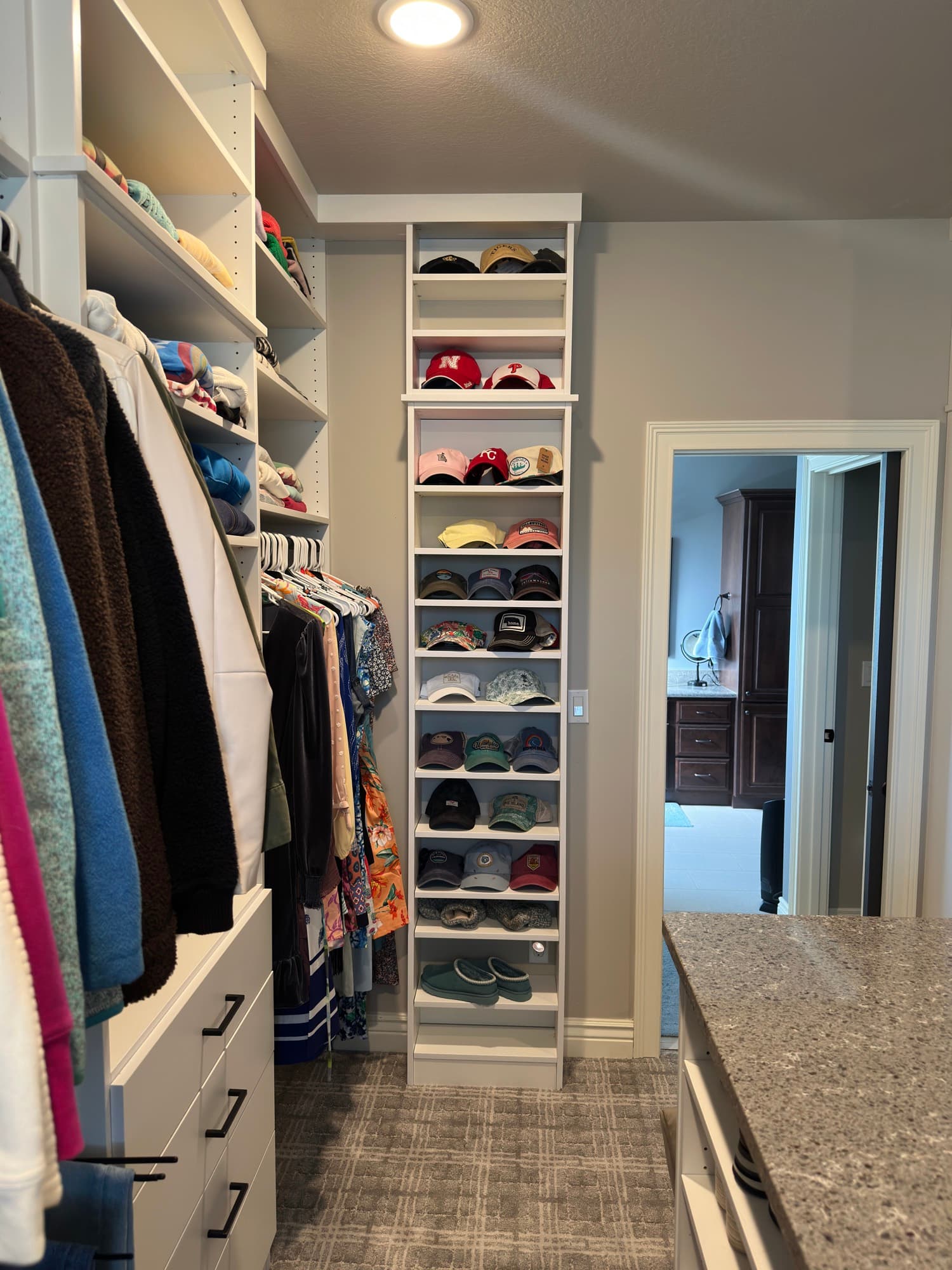
Right wall: long hanging plus shelving. The right wall kept a full-length hanging section for dresses and longer items, but we shortened it to free up space for a built-in shelving tower. That tower has five adjustable shelves for folded items like jeans, sweaters, and workout clothes.
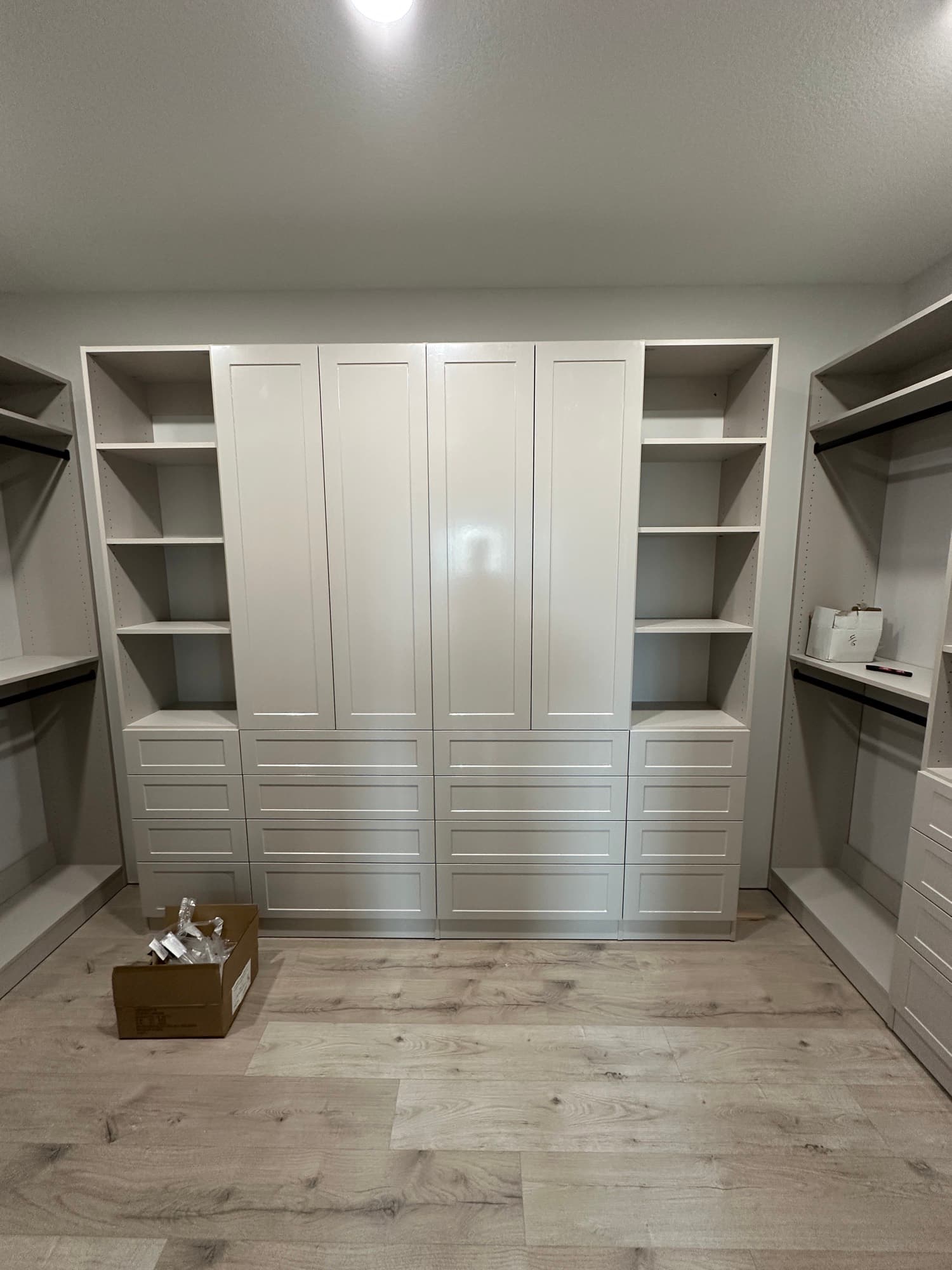
Back wall: the game-changer. The previously empty back wall became the hub of the closet. We installed a drawer unit with six drawers (socks, underwear, accessories, workout gear, seasonal items, and miscellaneous). Next to the drawers, we built in dedicated shoe shelving with angled shelves so every pair is visible without digging. Above the shoe section, we added hooks for bags and a small shelf for items used daily.
Accessories throughout. Belt hooks on the left wall behind the hanging sections. A valet rod near the door for laying out tomorrow's outfit. A small jewelry tray built into the top drawer.
Improved lighting. We recommended upgrading to LED lighting that illuminates the full closet without shadows. The homeowner handled the electrical separately, but the difference was immediate.
The After: What Changed
The numbers tell part of the story. Hanging capacity went up by about 60 percent. The shoe storage went from "pile on the floor" to 24 pairs neatly organized and visible. Six new drawers meant the bedroom dresser could be repurposed (it ended up in the guest room). The back wall went from zero storage to the most-used section of the closet.
But the real change was in how the closet felt to use every day.
Getting dressed went from a 15-to-20-minute frustration to a 5-minute routine. Everything was visible. Everything had a home. The homeowner told us that for the first time, they could actually see all their clothes at once and make decisions without digging.
The floor stayed clear because shoes had shelves and there was no reason to dump things on the ground. The shelving tower kept folded items in neat stacks instead of leaning towers that toppled constantly.
And here's the thing people don't expect: the closet felt bigger. It's the same 7x8 room. We didn't knock down any walls. But when everything is organized and the floor is clear, the space opens up. You can walk in, turn around, see everything. It breathes.
What This Project Cost
A transformation like this, with double hanging, a drawer unit, shoe shelving, accessories, and quality materials, typically falls in the $4,000 to $5,500 range for a closet this size. That includes everything: design, materials, and professional installation.
On the lower end, if you skip the drawer unit and go with simpler shelving, a similar closet could start around $2,500 to $3,000. On the higher end, premium finishes, more drawers, and additional accessories could push it toward $6,000 to $7,500.
Every project is different because every closet is different and every person uses their closet differently. That's the whole point of custom. But the ballpark gives you an idea of what we're talking about, and every number includes installation.
What Makes a Good Candidate for This Kind of Transformation
Not every closet needs a full overhaul. But if any of these sound familiar, your closet is asking for help.
You have a single rod and shelf. That builder-grade setup worked when the house was new and the closet was empty. It stopped working the day you moved in with a real wardrobe.
You can't see your clothes. If finding something means pushing hangers aside, digging through stacks, or checking three different locations, your closet's layout is the problem. Not the amount of clothes you own.
Your floor is covered. Shoes, bags, dirty laundry, whatever it is. If the floor is full, there's not enough designated storage above it.
You're using furniture outside the closet for closet things. Dressers, over-the-door organizers, and those fabric hanging shelves are all signs that your closet doesn't have enough built-in storage to handle your stuff.
You're in your long-term home. If you plan to be in this house for 5 or more years, a custom closet pays you back every single morning. The daily quality of life improvement is real, and the investment adds value to your home.
Your Closet Could Be Next
Every transformation starts with the same step: telling us about your space. Submit your measurements at measure.lbclassicclosets.com, and we'll schedule a free virtual design consultation. We'll talk through what's not working, what you wish you had, and what's possible in your specific space.
No pressure, no high-pressure pitch. Just two people looking at a closet and figuring out how to make it work better. That's what we've been doing since 1987, and it's still our favorite conversation.
LB Classic Closets Serving mid-Missouri since 1987 Columbia | Jefferson City | Lake of the Ozarks Free virtual design consultations
Thinking about a custom closet?
LB Classic Closets has been designing and installing custom closets across Mid-Missouri since 1987. Start with a free virtual consultation, no sales visit, no pressure.
Book a free consultation