Pantry Organization That Actually Works (Not Just Looks Pretty on Instagram)
Practical pantry organization ideas that last. Custom shelving, pull-outs, and storage solutions from LB Classic Closets in Columbia, MO.
Let's talk about the pantry situation. You've seen the Instagram pantries. Everything in matching clear containers, perfectly labeled with a fancy label maker, arranged by color like a grocery store end cap. It looks incredible. It also takes about six hours to set up and approximately four days to fall apart once real life happens.
Here's what we've learned from building custom pantry storage since 1987: the pantries that actually stay organized aren't the ones with the prettiest containers. They're the ones designed around how you actually cook, shop, and live. The structure of the pantry does the heavy lifting, not your willpower to keep reorganizing every weekend.
If you've been fighting with your pantry and losing, this one's for you.
Why Most Pantry Organization Fails
Before we talk solutions, let's be honest about why your current pantry situation isn't working. It's probably not your fault.
The shelves are wrong. Most builder-grade pantries come with four or five fixed shelves spaced too far apart. You end up stacking cans three deep, putting cereal boxes behind pasta boxes, and losing things in the back corners where nothing is visible. You know that can of coconut milk you bought six months ago? It's back there. Behind the kidney beans.
Everything is the same depth. Standard pantry shelves are usually 12 to 16 inches deep. That works for some items, but for a lot of what you store, it means items get pushed to the back and forgotten. Studies show that 30 to 40 percent of the US food supply goes to waste, and a lot of that starts at home with food nobody can see or find. A pantry where nothing gets lost in the back means less of it ends up in the trash.
There's no system for different types of items. Canned goods, baking supplies, snacks, spices, bulk items, small appliances, serving dishes. These are all completely different shapes and sizes, and they all end up on the same generic shelves. It's like asking a closet to work with one rod and one shelf for everything you own.
The door is wasted space. If your pantry has a door (and most do), the back of that door is prime storage real estate that's sitting empty. That's where spice racks, small bins, or wrap storage should live.
What Actually Works: Custom Pantry Design
When we design a custom pantry, we start the same way we start every project: by asking you how you actually use this space. What do you cook? How often do you shop? How many people are you feeding? Do you buy in bulk? Do you have kids who need to reach their own snacks?
The answers to those questions shape everything. Here's what smart pantry design looks like.
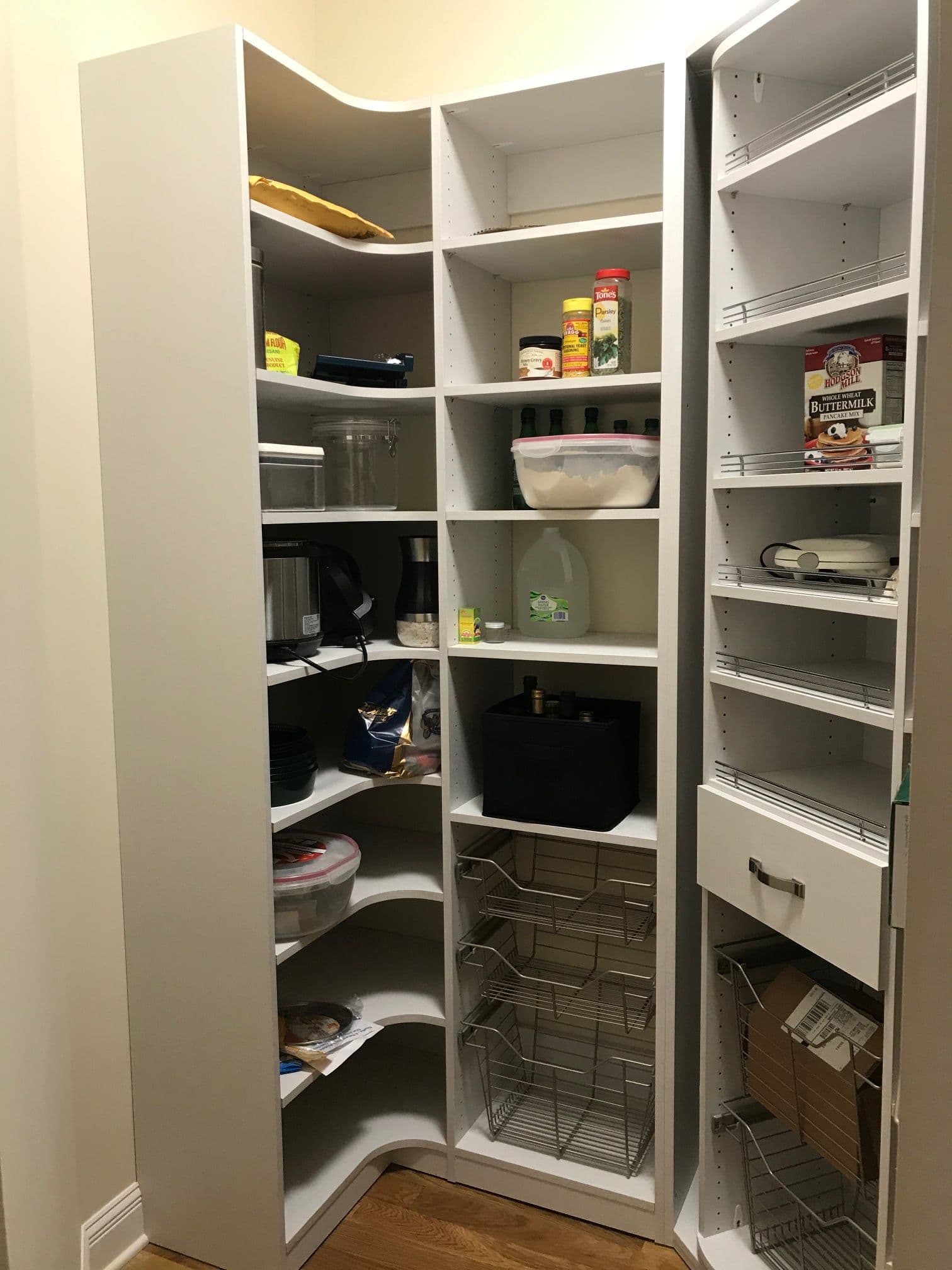
Adjustable shelving at varied depths. Not every shelf needs to be the same depth. Shallow shelves (6 to 8 inches) up front keep spices and small items visible without anything hiding behind them. Standard depth shelves (12 to 14 inches) in the middle handle cans, boxes, and most grocery items. Deeper shelves (16 to 18 inches) on the bottom handle bulk items, small appliances, and heavy things you don't want to lift from a high shelf.
Pull-out drawers and baskets. This is the single biggest upgrade you can make to a pantry. A pull-out drawer or basket lets you see everything in it without reaching into the dark corners. Produce, snacks, baking supplies, lunch-packing gear. Pull it out, grab what you need, push it back. No more archaeology expeditions to find the chocolate chips.
Dedicated zones. Just like a well-designed closet has zones for different types of clothing, a well-designed pantry has zones. A baking zone keeps flour, sugar, baking soda, and your mixing bowls together. A snack zone (especially if you have kids) puts grab-and-go items at the right height. A cooking zone keeps oils, spices, and frequently used ingredients within arm's reach of the stove.
Vertical dividers. Cutting boards, baking sheets, serving trays, and platters are awkward to stack. Vertical dividers let you slide them in and pull them out individually, like a filing cabinet for flat items. This alone can reclaim a whole shelf that was previously dedicated to a messy stack.
Door-mounted storage. Spice racks, wrap holders, small bins for packets and seasoning mixes. The back of the pantry door is free real estate, and using it means your shelf space stays clear for bigger items.
Proper lighting. You'd be surprised how much difference lighting makes in a pantry. If you can't see it, you won't use it. A simple overhead light or LED strip under the top shelf changes the whole experience.
Pantry Organization for Different Kitchen Types
Not every kitchen has the same pantry situation, and the solutions are different depending on what you're working with.
Walk-in pantry. If you've got a walk-in, you have the most flexibility but also the most opportunity to waste space. The key is making sure every wall works. Don't leave the wall behind the door bare. Don't put deep shelves everywhere when shallow ones would prevent the "lost in the back" problem. A walk-in pantry can easily store enough for a family of six if it's designed right.
Reach-in pantry. This is the most common setup in mid-Missouri homes. A single or double door pantry that's basically a closet. The solution here is maximizing every square inch: adjustable shelves, pull-out baskets on the bottom where you can't see into fixed shelves anyway, and door-mounted storage. A well-designed reach-in pantry holds more than most people expect.
Cabinet pantry. Some kitchens don't have a pantry at all, just extra cabinet space. If that's your situation, the same principles apply at a smaller scale. Pull-out organizers inside cabinets, lazy Susans for corner cabinets, and tiered shelf inserts that let you see everything.
Converting a closet to a pantry. This is one we do more often than you'd think. If you've got a coat closet or utility closet near the kitchen that's being wasted on random stuff, converting it to a pantry can be a game-changer. We remove the existing rod and shelf, build in proper pantry shelving, and suddenly you've got storage that actually supports your kitchen.
The Cost of Getting Your Pantry Right
Custom pantry systems typically run $2,000 to $5,000, depending on the size of the space and what you need. A basic reach-in pantry with adjustable shelving and a couple of pull-out baskets might come in around $2,000 to $2,500. A full walk-in pantry with pull-outs, vertical dividers, door storage, and premium shelving will be in the $3,500 to $5,000 range.
Every price includes professional installation. We build it, we install it, we make sure it works. That's the finished number, not a parts list.
Is it worth it compared to buying a bunch of containers from the store? Here's the thing: containers organize what's on the shelf, but they don't fix the shelf. If your shelving is wrong, if you can't see what you have, if there's dead space everywhere, matching containers are a bandage on a structural problem. Fix the structure first, and you might find you don't need the fancy containers at all.
How to Get Started
If your pantry is driving you crazy and you're ready to fix it for real, here's the move.
Submit your pantry measurements through our online form at measure.lbclassicclosets.com. Take a few photos of what you're working with (messy is fine, we've seen it all). We'll schedule a free virtual design consultation to talk through your space, your cooking habits, and what would actually make your life easier.
We'll design a pantry system in ClosetPro so you can see exactly what you're getting before we build it. No guessing, no surprises. Just a pantry that finally works the way you need it to.
LB Classic Closets Serving mid-Missouri since 1987 Columbia | Jefferson City | Lake of the Ozarks Free virtual design consultations
Thinking about a custom closet?
LB Classic Closets has been designing and installing custom closets across Mid-Missouri since 1987. Start with a free virtual consultation, no sales visit, no pressure.
Book a free consultation